

The smar basket is Nabeul's classic basket, with its rectangular form.
We have adapted it for La Liste Tunisienne collection, using the Tunisian fouta’s three stripes pattern in the middle of the basket and added leather handles for a more urban style.
Materials : Rush & leather
Styles and sizes :
Natural basket with the fouta’s three indigo stripes pattern in the middle
Indigo basket with the fouta’s three natural stripes pattern in the middle.
Natural basket with the fouta's three green stripes pattern in the middle.
Green basket with the fouta's three natural stripes pattern in the middle.
Dimensions : H : 32 cm / L : 41 cm / W : 15 cm

I have kept to the original model and created another with the two colours of Nabeul’s old pottery’s traditional enamel.
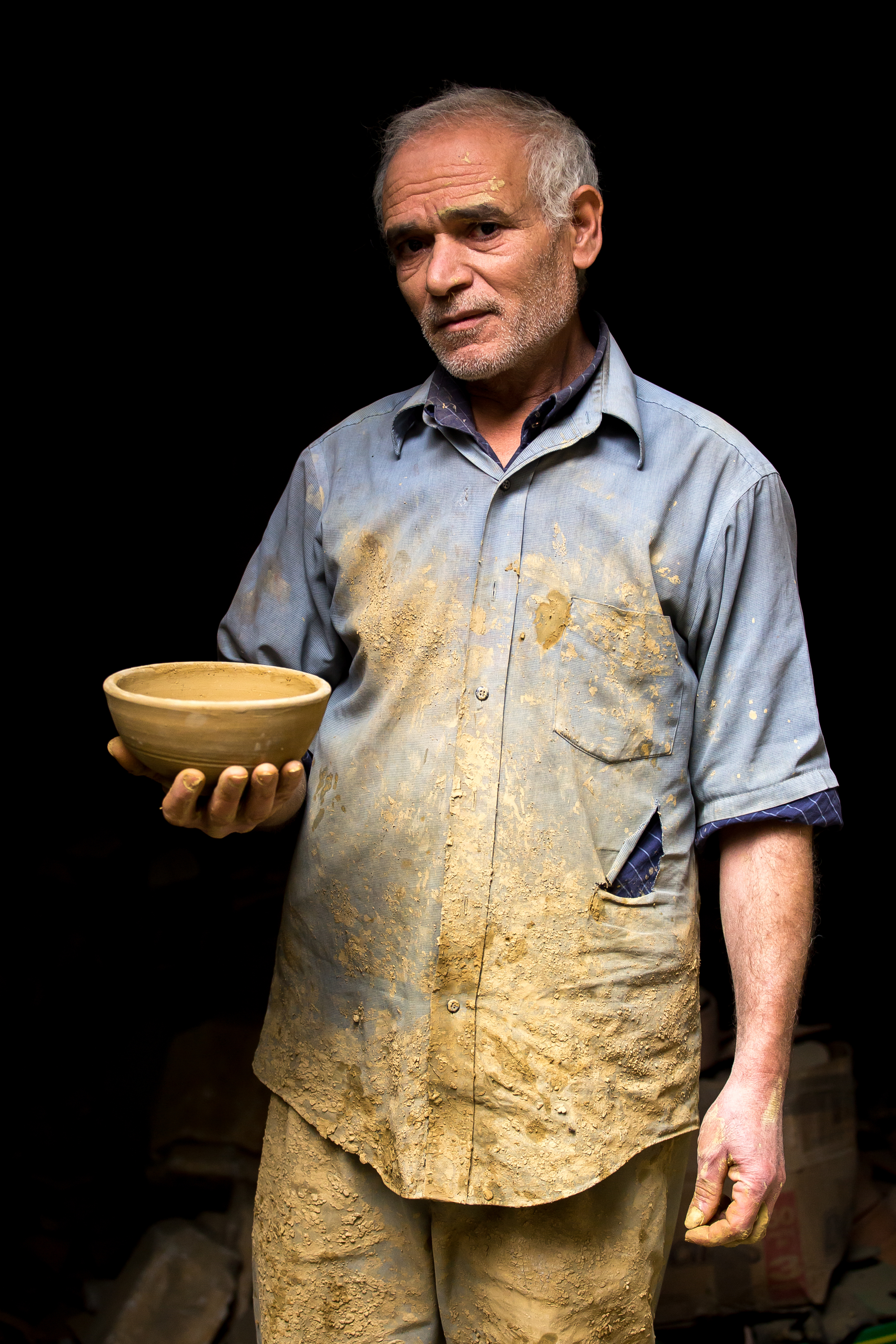
Our artisan Habib kept his old wheel as well as his manual skills. He is one of the last potters in that potters’ area on the hillside, in the surroundings of Nabeul, where these bowls were wheeled.
These bowls are available in three sizes: 25, 17 and 11.5 cm

Techbik, in Tunisian language, means “fishing nets”. It’s also the name of an embroidery stitch used to decorate wedding gowns in the region of Mahdia.
This traditional wedding gown has been simplified to become a caftan available in white light washed linen and in blue light washed linen.
Material : 100% linen embroidered dress
Styles :
Dark blue
White

Somaa refers to a village situated in the surroundings of Nabeul, the city of potters and rug makers.
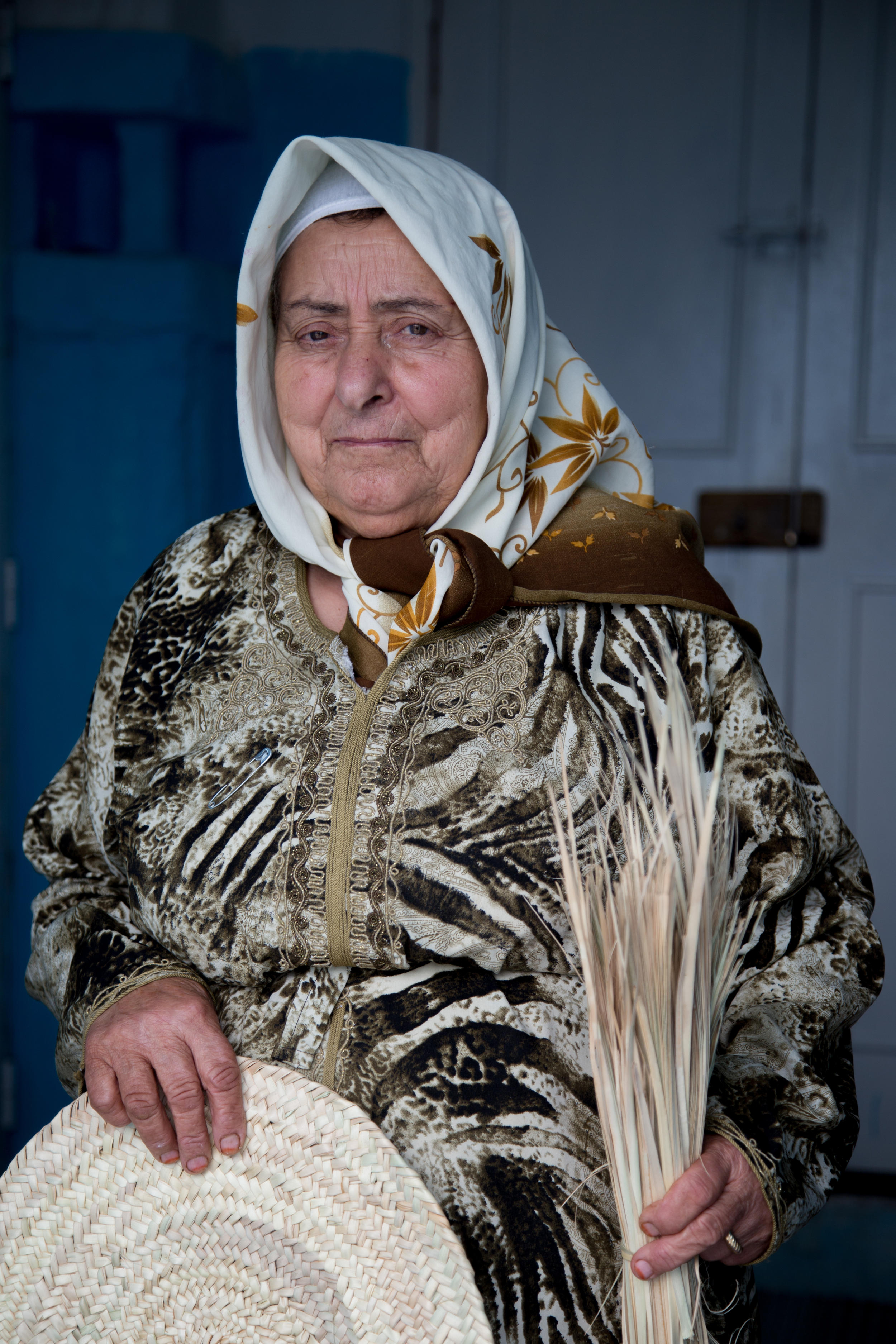
The two women, Djamila and Ichraf, accomplices, weave and put together each handmade wild palm fiber circle.
This floor rug, in its rectangular version, may also be hung in a room or in the garden so as to separate open spaces. They can also decorate a wall when hung up.
Material : Wild palm fiber.
Style : Assembly of woven circles with different sizes.
Diameter : 150 cm

Let’s imagine Odette Touitou, a young lady in the sixties, in Tunisia.
This dress was both her beachwear and her morning dress.
It’s one of the most beautiful memories I have of my mother, simple and elegant.
This “little” traditional dress worn at home, along with the «fadhila» knitwear, the “Takrita” headscarf - that women farmers traditionally tie over their heads- were the favorite outfits of the modern ladies at that time, as to underline a link between their identity, the tradition and a modern way of wearing them. I’ve adapted this traditional dress using blue chambray and grey chambray shirt material.
Material : 100% cotton
Style :
Blue chambray version
Grey chambray version
Bib and sleeves with ribbons and braids.

The conception of this pair of plates in inverted colors combined the three-striped pattern of the fouta and the hand-made ceramics.
They can be used as serving plates, dinner plates or just to put on a dresser.
The Foutamics plates artisan-ceramists, work besides Maren, a German in love with Tunisia, where she settled 20 years ago and created her workshop dedicated to handmade ceramic, le Lézard Rouge.
Material : Handmade ceramic
Styles : Pair of black & white plates : a plate with white background and a black fouta’s three-striped pattern and a plate with black background and a white fouta’s three-striped pattern.
Pair of blue & white plates : a plate with white background and a blue fouta’s three-striped pattern and a plate with blue background and a white fouta’s three- striped pattern.
Diameter : 27 and 32 cm

The HALFA BETA box contains six placemats.
Once the placemats are removed from the box, it turns into a basket and the top becomes a tray. The set comes in two colours. Inside the box there are three natural placemats and three brown placemats.
The Halfa, is an abundant plant in Tunisia, especially in the regions of Kasserine, Kairouan, SidiBouzid and Gafsa.
Material : Halfa natural fibers and cotton thread.
The box includes :
One Natural Halfa box-basket
One brown Halfa lid-tray.
Three natural Halfa placemats.
Three brown Halfa placemats.
Box diameter : 32 cm.

The embroidered pattern is the techbik pattern, and techbik means “fishing nets” in the Tunisian dialect.
There is a denim version for a more frequent use.
Styles & materials :
White : 100 % linen
Denim : 50 % cotton, 50 % linen
Dimensions : 50 x 36 cm
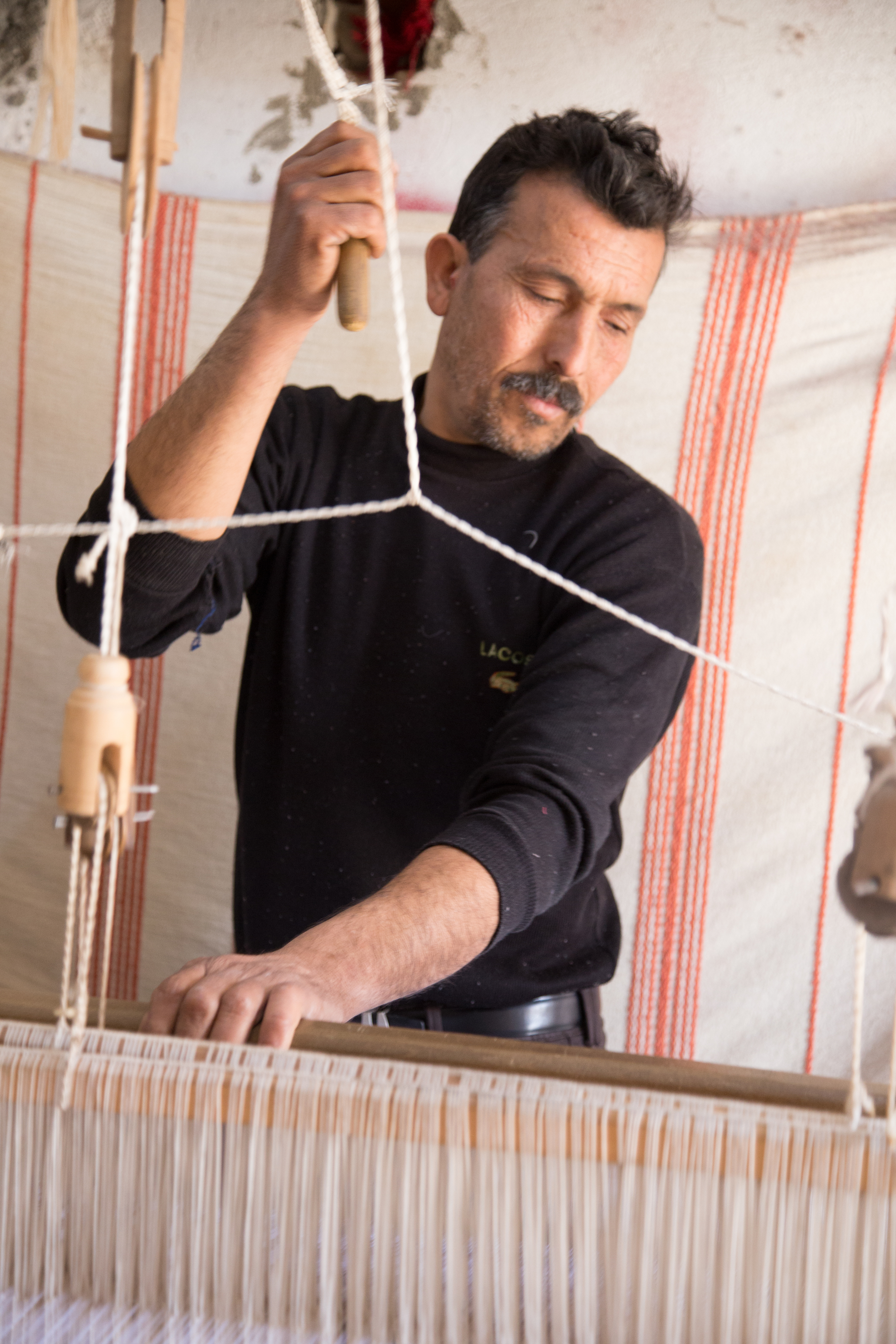
The smar is the rush cultivated in the marshes between water and land, in the north of Tunisia, precisely in the Cap Bon.
Once sorted and dried, the rush is woven in stripes of different widths, using a loom fixed to the floor, into placemats, rugs, and baskets.
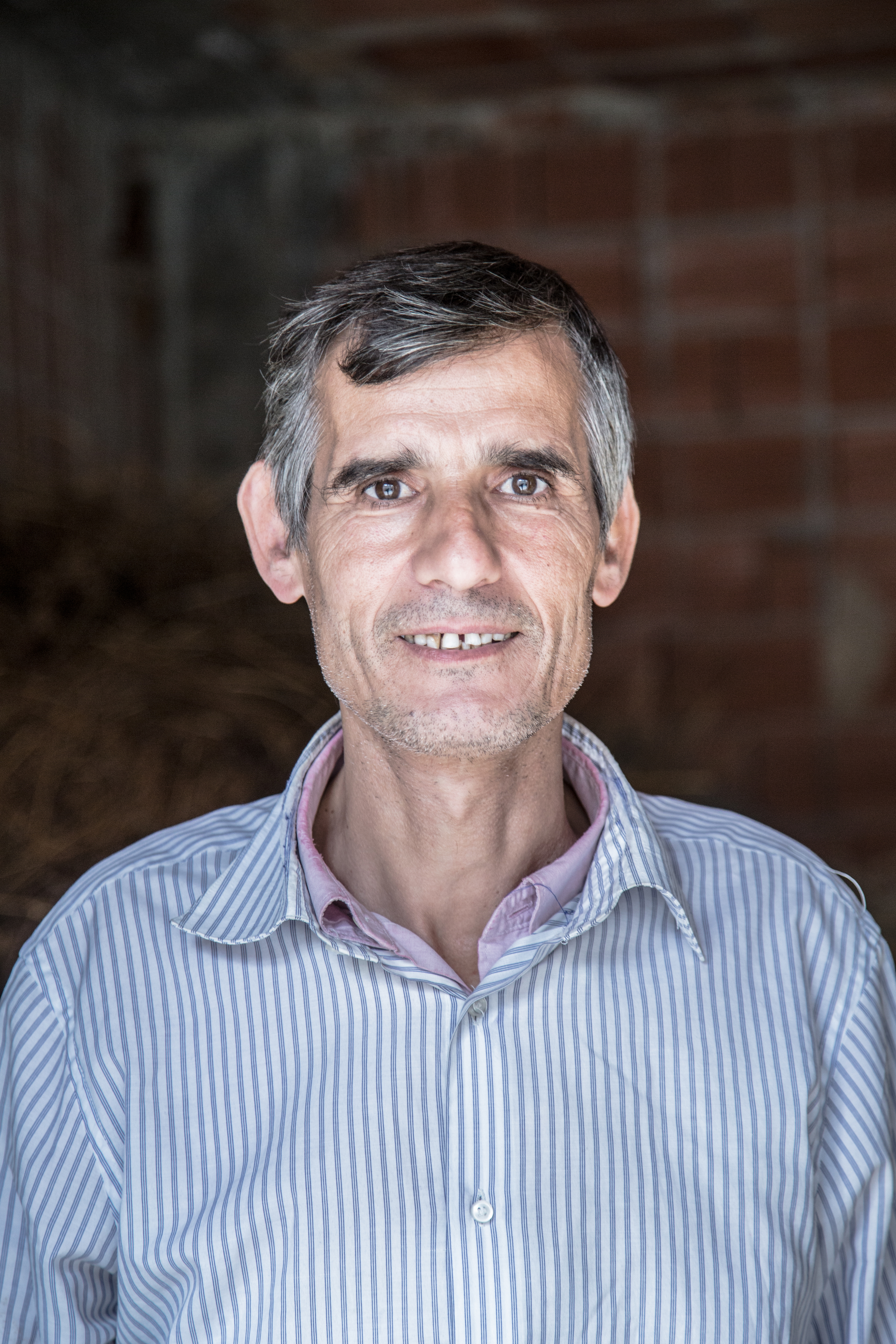
Anouar has been weaving since he was a child. He was trained by the senior weaver of Nabeul
Our rugs can be used as bedside rugs, hung on the wall, in the garden, and can be stored once rolled, and knotted with a leather tie
The Smar rugs are available in two colors and two different patterns.
Materials : Rush and leather
Size and styles : 180 x 78 cm
Natural model : Natural rug, three indigo stripes fouta pattern in the middle.
Indigo model : Indigo rush rug, three natural stripes fouta pattern in the middle.
Natural model : Natural rush rug, three green stripes fouta pattern in the middle.
Green model : Indigo rush rug, three natural stripes fouta pattern in the middle.
The Smar rugs are woven with hemp yarn and have a natural leather tie on the inside marked La Liste Tunisienne.